
Dianne's story
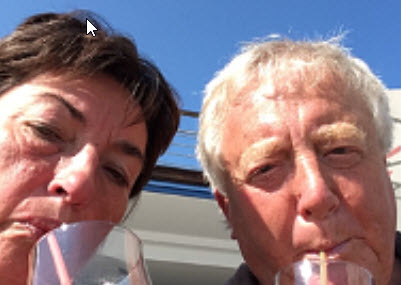
Dianne’s husband, Arnot, had a stroke in February 2020, just before the Covid-19 pandemic forced a national lockdown. Here, Dianne and Arnot are interviewed by Professor Fiona Jones about their experiences.
Fiona: What do you remember about when Arnot first had his stroke and your story?
Dianne: Well it was twenty to four in the morning, and he’d been to the toilet. When he came back, he just stood there in the doorway of the bedroom. I said, “are you alright?” He couldn’t speak, it was as simple as that. So, I went into rapid panic/practical mode, I phoned 999 and they said the ambulance would be with you as soon as possible. Half an hour later, I phoned again, and I had a chap tell me, (he was very nice about it), that it could take up to three hours. So, I phoned our son, who lives the other side of Cardiff, who then took him in. Everything moved from there on.
Fiona: And what time of year was this? Just thinking about where you were in the pandemic when it happened.
Dianne: It was the 23rd of February on a Sunday morning. When we got to the A&E, there were lots of people there who were sobering up because it was a rugby match in Cardiff the night before. He spent a whole week in the Heath hospital, and then he was transferred to the Rehab Centre in Llandough. He went in one day, had an assessment the next day – physically and speech wise, and they sent him home the next day. So that’s all the length of time he was in. I think that is when they were clearing the wards, before Covid-19 really kicked off, looking back on it.
Fiona: Do you remember when you knew what had happened to Arnot? And what were you told? Or was it something that you felt you just knew that it was a stroke?
Dianne: I thought it was a stroke, because he couldn’t speak. I could tell you know, and I kept telling them – the people on 999, when they were asking me questions, ask him to say something to them. But I said, he can’t speak; it’s as simple as that. There was nothing coming out. So, I knew perfectly well it was a stroke.
Straightaway, I thought this is the end of the world as we know it. A silly thing to say. But that is what went through my mind at the time. And then as I went into practical mode, packed a suitcase and everything else
Fiona: How long did that feeling last for you? And has it has it been something that you’ve you’ve thought of other times?
Dianne: Possibly, yes, yes. But no – I haven’t dwelled on it. But I did think it at the time, you know, and then I just got on with it. I’ve helped him along the way hopefully.
I have always been a practical person My mother was, and I organised things all over the years in school. I was a bossy boots!
Fiona: What is it that helped you cope? Is it something about how you would have been before all this happened?
Dianne: It would be natural to me actually, to do – to be practical like that. He’s the artistic one, I’m the practical one, but we’ve lasted nearly 50 years together!
Fiona: Can you give me an example of something that you just got on and organised?
Dianne: Well, to start with, he was having trouble communicating in the hospital. He was getting terribly agitated because he couldn’t speak to the staff, where I could. It’s a small example; but they kept giving him two tablets once a day. And he was doing his best to tell they were wrong. I wrote it down for him. But still, he was supposed to have one twice a day, and they kept giving him two once a day. This really was getting him all worked up. We’ve had a good relationship with the cardiology department in the Heath hospital, they’ve been great – so I phoned them, and they sent one of the nurses we’ve been dealing with up to the ward at Llandough to sort it out.
Fiona: It’s just actually joining the dots, isn’t it and making sure that things happen?
Dianne: Yes, yes. But I was essential, because he just wasn’t getting through to them and they weren’t even listening to me. Even though it was down on paper.
But I was essential, because he just wasn’t getting through to them, you know, and, and they weren’t even listening to me.
Fiona: It’s like being the conductor, isn’t it? And managing lots of things and keeping on top of things. So when when Arnot came home – it probably felt a little bit sooner than you were expecting?
Dianne: Well, I don’t drive for example. So Llandough would have been the most difficult place for me as I would have had to travel all across Cardiff. We’ve got a lot of very good friends. But nevertheless, it would have been very inconvenient. But I thought, well, that’s the best place for him to have proper rehabilitation and speech therapy. Although he didn’t particularly – other than his hand and he worked on that himself. I thought it would be the best place for him. But then there we are. That’s how it turned out. And I’m glad he’s home.
Fiona: And what about that those first few days when Arnot came home again. How was that for you? And you both?
Dianne: Well he was very tired. You know, I more or less did everything for him right at the beginning. But what was frustrating for him is that he didn’t hear from anybody medical. It took 10 days before we had any contact with anybody. And a speech technician – I think she was called – she was very good, she came to the house twice to give him speech therapy, and then they were stopped due to the virus. So then he had a series of sessions on FaceTime with another speech therapist, but that’s all the help he’s had.
Fiona: I’m just interested in the impact on you because, you know, a stroke doesn’t it happens to the person but it also happens to the family as well. And sort of trying to make sense of it, as well as being in a pandemic. So what what were the what were the things that helped you or that you found difficult?
Dianne: What I found difficult was that the speech was very difficult, and he was getting frustrated, and I’m sure he’s told you before -any little thing that would go wrong, he would just blow up and come back down again pretty soon after. But that was the thing that upset me more than anything to be honest with you. For example, we told you that we are moving house, so that is stressful anyway. Also, if we did an email, for example, it had to be exactly the way he wanted it to say, in a way he would have said it in the office! We all do things in different ways. What helped me at the beginning, was that we had a very, very good crowd of friends and they were on the phone or we had, I suppose before the lockdown, probably had four lots of people here. That really boosted Arnot because he is a person who likes company and likes to show off as you can see. Seriously, that is what we’ve missed the most to be honest. And seeing our grandson obviously, yeah, those are the main things. I know that if Arnot would’ve had visitors to the house, he’d have come on better than he did at the beginning. And he’s coming on fine, actually. He would have relished speaking with others – English and Welsh – and about business. I know Arnot’s told you before that he’s had no help whatsoever with the Welsh language, which, and I am no expert, even though I taught maths, so I really can’t tell him what to do with his tongue, etc to get some of the words out in Welsh. Then if he talks to people in Welsh, he gets anxious, because he’s Welsh isn’t as good as his English. But it doesn’t matter. He just cannot get around the fact that it doesn’t matter that he comes out with English words. But that’s how it is.
You know, I more or less did everything for him right at the beginning. But what was frustrating for him is that he didn’t hear from anybody medical. It took 10 days before we had any contact with anybody